

The California Governor’s Mansion is a historic Victorian residence in downtown Sacramento that has served as the symbolic heart of the state’s executive history. Built in 1877 for hardware merchant Albert Gallatin, the home reflects the Second Empire and Italianate Victorian styles, distinguished by its mansard roof, ornate woodwork, and central tower.
After the state purchased the home in 1903, it became the official residence of California’s governors for over six decades, housing 13 leaders, including future Chief Justice Earl Warren and President Ronald Reagan. Though no longer continuously occupied, the mansion endures as a living museum and ceremonial venue, preserving California’s political and architectural heritage.
Key Takeaways
- California Governor’s Mansion, built in 1877, is a Second Empire/Italianate Victorian landmark in Sacramento.
- The state purchased it in 1903, and it housed 13 governors until 1967.
- Ronald Reagan moved out in 1967, and Jerry Brown briefly returned in 2015.
- The mansion features 30 rooms, a mansard roof, and period furnishings like a Steinway piano and Persian rugs.
- Since 1967, it has served primarily as a State Historic Park and museum, open for public tours.
Victorian Splendor: Architectural Highlights of a Political Icon
The California Governor’s Mansion is an excellent example of Second Empire/Italianate Victorian architecture. The three-story wooden structure features a mansard roof that provides space for a full third floor, historically home to a grand ballroom. Its central tower and gingerbread-style woodwork provide visual distinction, while tall, narrow windows and elaborate brackets emphasize verticality typical of the style.
The exterior presents a symmetrical, Italianate-inspired façade, complemented by decorative eaves and wooden corbels. Inside, the mansion includes 30 rooms, blending formal and domestic spaces. Period features include Persian rugs, marble fireplaces, and a 1902 Steinway piano, creating an atmosphere of late 19th-century affluence.
These architectural elements reflect the aspirations of California’s early elite and the importance of Sacramento as a center of state governance during the Gilded Age.
From Gallatin to Governors: The Mansion’s Storied Past
Albert Gallatin, a prominent hardware merchant, built the mansion in 1877 as a private family home. Its scale and architectural detail reflected the prosperity of Sacramento’s merchant class in the post–Gold Rush era. In 1887, the home was sold to Joseph Steffens, and it remained in private hands until the State of California purchased it in 1903 to serve as the official governor’s residence.
Between 1903 and 1967, 13 governors and their families lived in the mansion. Notable residents include Hiram Johnson, Earl Warren, and Ronald Reagan, each leaving their mark on the house’s history. The residence balanced family life with political activity, hosting holiday events, receptions, and ceremonial occasions.
By the mid-20th century, concerns about fire safety and outdated infrastructure led governors to reconsider living there. In 1967, Ronald Reagan moved his family out, and the house transitioned into a state historic park and museum, ending its era as a continuous executive home.
Gubernatorial Living: Daily Life Within Ornate Walls
Life in the Governor’s Mansion involved a delicate balance between private family routines and public responsibility. The second floor offered family quarters, while the first floor was devoted to formal entertaining, with parlors, a dining room, and reception areas designed for ceremonial functions. The third floor ballroom hosted dances and social gatherings, though it was later divided into additional living space.
Throughout its residential years, the mansion witnessed governors’ families adapting to the constraints of a historic home. Limited privacy, aging facilities, and security challenges often influenced gubernatorial decisions to relocate, as Reagan famously did in 1967.
Despite these challenges, the house provided a unique intersection of domestic life and political activity, where decisions affecting the state were often made under the same roof as family dinners and holiday celebrations.
A Museum of Power: Touring California’s Political Heritage
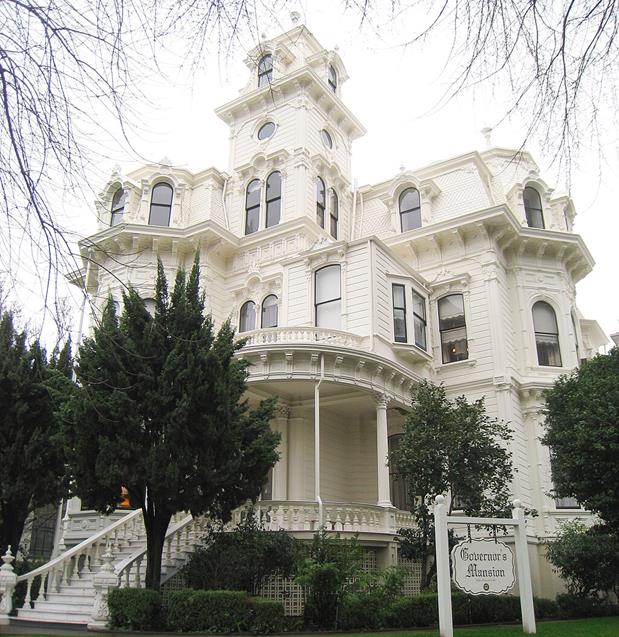
After its conversion to a state historic park in 1967, the mansion became a museum of California’s executive history. Visitors walking its halls today encounter period furnishings, historic artifacts, and interpretive exhibits that illustrate more than a century of political life.
Highlights include:
- The Steinway piano (1902) in the parlor, a centerpiece of ceremonial events
- Velvet and antique furnishings associated with governors from the early 20th century
- Persian rugs and marble fireplaces reflecting Victorian taste
- The third floor, reopened to tours in 2013 after decades of closure
Public tours, seasonal events, and educational programs provide citizens and tourists with a tangible connection to the state’s political heritage.
Tale of Two Mansions: Downtown Elegance vs. Carmichael Modernity
The story of the California Governor’s Mansion reflects shifting approaches to executive living. While the 19th-century Victorian home anchored gubernatorial life for more than 60 years, modern governors have often chosen private residences for practical and security reasons.
Governor Jerry Brown’s decision to move in during 2015 briefly restored the mansion’s role as a living residence, but by 2019, it was once again unoccupied, continuing primarily as a ceremonial and museum property. The home’s dual identity—as both a historical artifact and occasional executive venue—illustrates the evolving relationship between California’s past and its present governance.
A Mansion Preserving California’s Legacy
The California Governor’s Mansion remains a symbol of Victorian elegance and political heritage in Sacramento. From its 1877 origins as a private home to its transformation into a state historic park, the property tells the story of 13 governors, historic decisions, and a changing vision of executive life.
Through ongoing preservation and public access, the mansion continues to connect Californians with the state’s rich political and architectural history, ensuring that its legacy endures for future generations.