
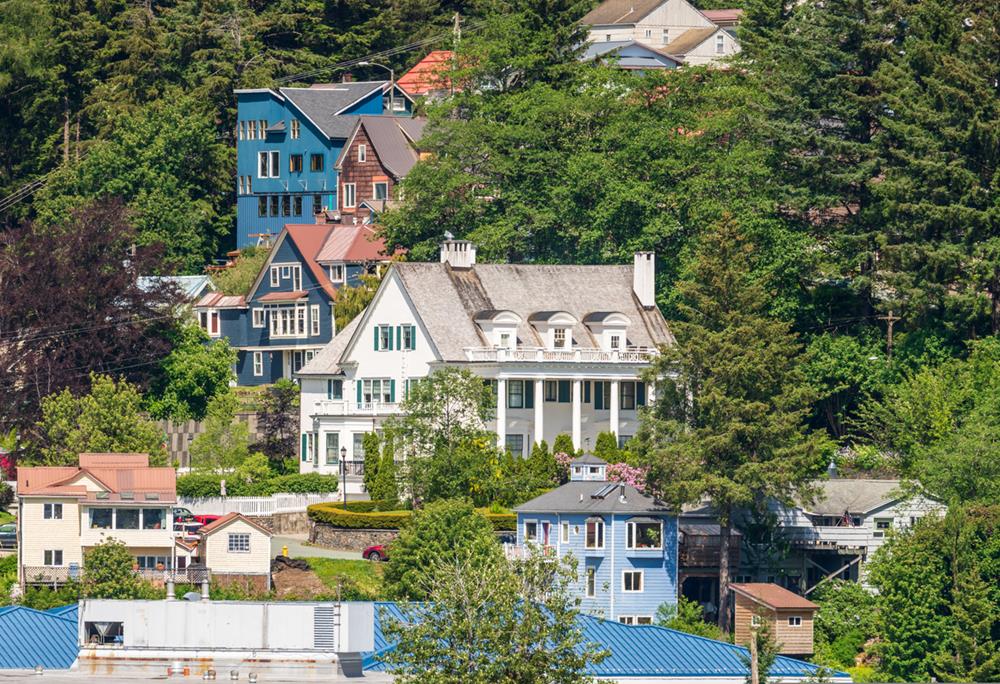
The Alaska Governor’s Mansion in Juneau stands as a symbol of the state’s territorial and executive heritage. Completed in 1913, the Colonial Revival residence was the first official home for Alaska’s governors and has overlooked the capital through its transition from district to territory to statehood.
Despite its modest $40,000 budget, the mansion has hosted dignitaries, witnessed political milestones, and endured Alaska’s challenging climate. Today, it remains a living residence and ceremonial landmark, balancing the responsibilities of executive function with the demands of historic preservation.
Key Takeaways
- Alaska’s Governor’s Mansion in Juneau was built in 1912–1913 for $40,000 in Colonial Revival style.
- Designed by James Knox Taylor, it used clapboard siding instead of brick due to budget constraints.
- First occupied in January 1913 by Governor Walter Eli Clark during Alaska’s territorial era.
- Hosted President Warren G. Harding in 1923 and has undergone major restorations in 1936, 1963, and 1983.
- Listed on the National Register of Historic Places in 1976, it serves as both a residence and historic landmark.
From Bare-Bones Budget to Architectural Icon
When Congress authorized funds for the Alaska Governor’s Mansion under the 1910 Public Buildings Act, only $40,000 was allocated—far less than similar projects in the continental United States. Architect James Knox Taylor initially envisioned a brick or stucco exterior with elaborate interior finishes. Budget constraints, however, led to simplified clapboard siding and reduced ornamental features such as parquet flooring and decorative pilasters.
Construction began in 1912 and was completed in early 1913 by contractor Christ Kuppler of Seattle. The resulting Colonial Revival structure featured a steep gable roof, two-story portico, and symmetrical white façade. Despite its simplifications, the home quickly became a prominent landmark in Juneau, admired for its proportions and symbolic presence on the hillside above the city.
The mansion’s design reflected both practicality and prestige—a balance between frontier conditions and the expectations of territorial governance.
Symbolic Cornerstone of Alaska’s Governance Journey
The mansion’s history parallels Alaska’s path to self-governance. Governor Walter Eli Clark and his family first moved into the residence in January 1913, just as the first territorial legislature convened, marking a shift toward local political authority.
Built on land that had previously been part of a school for Alaska Native children, the site symbolized the changing priorities of territorial administration in the early 20th century. Over the decades, the home became a venue for legislative discussions, social events, and ceremonial functions, reinforcing Juneau’s role as the political center of Alaska.
Its significance was highlighted during President Warren G. Harding’s 1923 visit, when he reportedly referred to the mansion as the “White House of the North.” This nickname underscored its role as a visible emblem of executive authority in the territory.
Adaptation and Evolution Through Challenging Conditions
Life and governance in the Alaska Governor’s Mansion have been shaped by harsh climate and limited maintenance budgets. From its earliest years, the building required frequent repairs to address weather-related damage and aging infrastructure.
By the mid-20th century, deferred maintenance led to major renovations. A significant 1936 update improved the exterior, while 1963 and 1983 restorations modernized plumbing, heating, and electrical systems without compromising historic features. The 1983 project was especially comprehensive, temporarily gutting the interior to address structural and safety concerns.
Today, preservation efforts continue to balance historical authenticity with modern functionality, ensuring the home can withstand Alaska’s environment while remaining a usable executive residence.
The Hidden Stories Behind the White House of the North
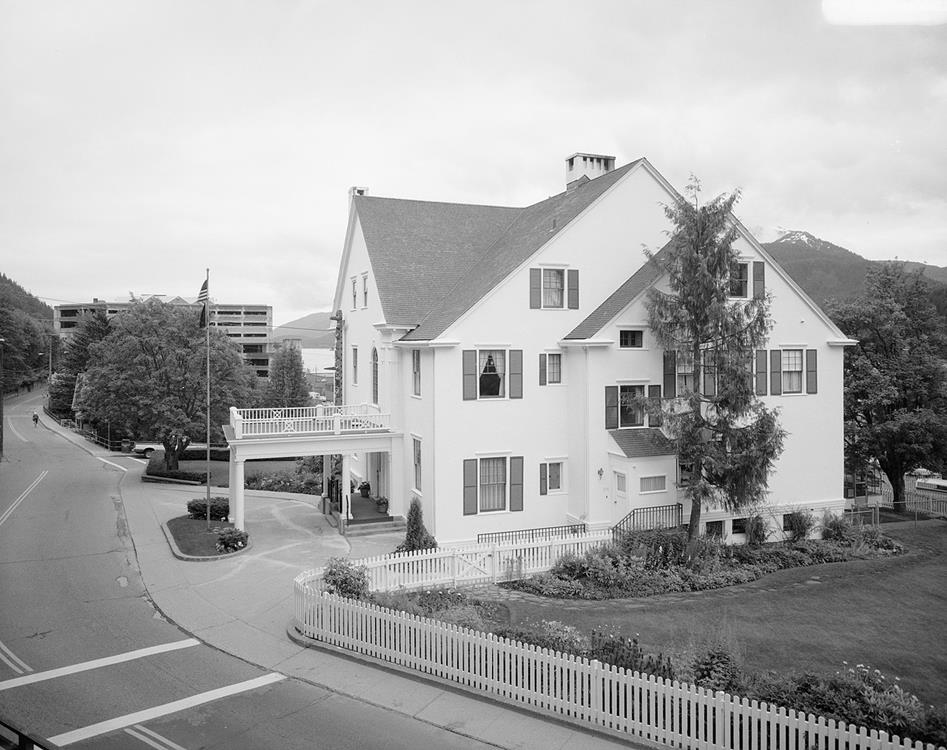
Behind its white façade, the mansion holds cultural and ceremonial significance that goes beyond architecture. Over the decades, it has hosted state events, visiting dignitaries, and community gatherings, serving as both a residence and a social hub.
In 1939, the Works Progress Administration and Civilian Conservation Corps installed a totem pole on the grounds, symbolically connecting the site to Alaska’s Indigenous heritage. This addition reflected a growing recognition of the territory’s diverse cultural history within its seat of governance.
The home’s nickname, the “White House of the North,” reflects both its ceremonial role and its enduring presence in Alaska’s political narrative.
Legacy of Executive Stewardship and Preservation Efforts
Over a century after its completion, the Alaska Governor’s Mansion remains a testament to territorial ambition and careful stewardship. Its listing on the National Register of Historic Places in 1976 formalized its status as a protected heritage site, ensuring that public history and active governance would coexist within its walls.
First families and state preservation programs have continued to maintain and adapt the residence, from kitchen renovations and landscaping improvements to educational initiatives that share its history with the public. These efforts ensure the mansion remains both a functional home and a touchstone for Alaska’s executive legacy.
As the state continues to evolve, the mansion endures as a living museum, embodying the resilience and continuity of leadership in America’s northernmost capital.