

The wrecking ball became a powerful tool in the demolition industry during the early 20th century. It was first used to take down large buildings that were difficult to dismantle with hand tools. Mounted on a crane, the heavy steel ball would swing into structures, bringing them down with repeated strikes.
But where did the wrecking ball come from? And how was it invented? Let us find out as we take a look at the origins of the wrecking ball.
| Date / Period | Event | Description |
|---|---|---|
| Pre-1888 | Manual Demolition Techniques | Structures were dismantled using hand tools (hammers, chisels, crowbars), fire to weaken wood, rope-and-pulley systems, or undermining foundations. |
| 1888–1889 | First Documented Wrecking Ball Use | Henry Bath & Co. employed a heavy steel ball to break up the SS Great Eastern at Rock Ferry on the River Mersey—earliest recorded wrecking-ball demolition. |
| Early 1930s | Introduction in Urban Demolition | Following sledgehammer wrecking in the 1930s, heavy steel spheres suspended from cranes began replacing manual labor in city demolitions. |
| 1950s–1960s | Peak Ubiquity | Widespread use due to labor-cost savings and the efficiency of swinging steel balls from cranes for rapid teardown of brick and masonry buildings. |
| 1970s | Decline Begins | Hydraulic excavators, high-reach demolition machines, and precise attachments overtook the wrecking ball due to better control, safety, and reach. |
| 2013 | Cultural Resurgence | Miley Cyrus’s “Wrecking Ball” music video premiered on September 9, 2013, reviving the wrecking ball as a pop-culture symbol. |
Early Methods of Demolition Before the Wrecking Ball
Before the wrecking ball was invented, demolition was done using more manual and time-consuming methods. These early techniques were often labor-intensive and less efficient, but they served as inspiration for future developments in demolition technology.
- Hand Tools: Workers used hammers, chisels, and crowbars to take apart structures piece by piece. This method was slow but allowed for careful removal of materials.
- Fire: In some cases, fire was used to weaken wooden structures, making them easier to bring down. However, this method carried obvious risks, including uncontrollable spread and damage to surrounding buildings.
- Rope and Pulley Systems: Large groups of workers used ropes and pulleys to pull down walls or roofs. This method required coordination and physical strength but allowed for the controlled collapse of sections of buildings.
- Undermining: This technique involves digging beneath the foundations of a structure to make it collapse under its own weight. It was mainly used for stone or brick buildings but was not always predictable.
The Invention of the Wrecking Ball
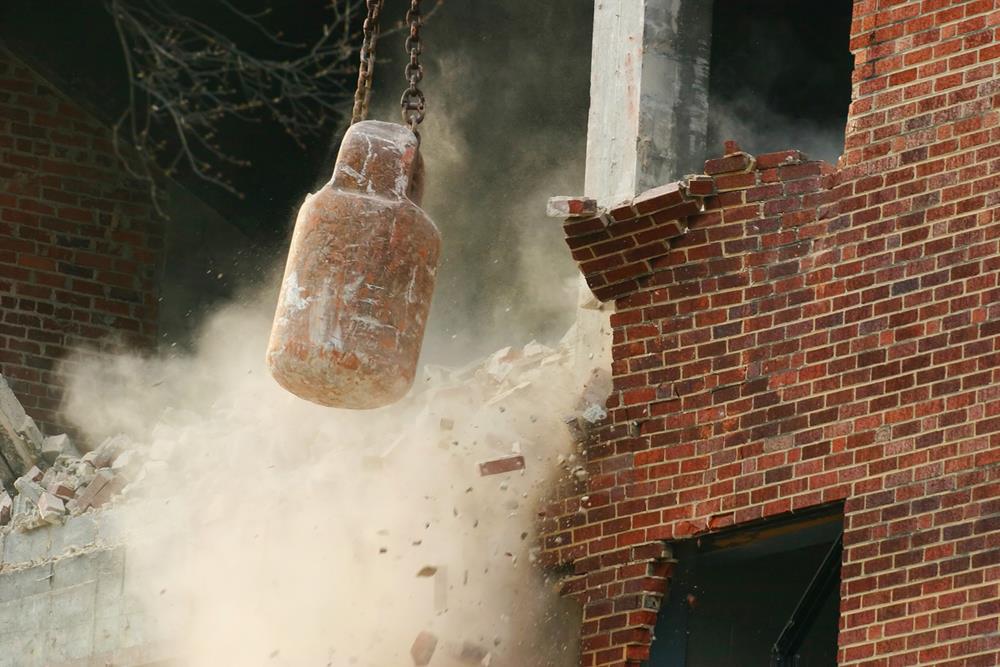
The invention of the wrecking ball is often credited to the early 20th century, though pinpointing a single individual responsible for its creation is difficult. The development of the wrecking ball was a response to the growing need for more efficient demolition tools in rapidly expanding cities.
By the 1920s and 1930s, demolition projects became larger and more complex, particularly in urban areas like New York and Chicago, where old buildings needed to be cleared to make way for new developments.
One of the earliest recorded uses of the wrecking ball in the United States was during the 1930s, although the concept likely emerged a bit earlier. Crane companies, particularly Bucyrus-Erie, were instrumental in developing the equipment needed to support such a heavy demolition tool. Their cranes were strong enough to swing the large steel balls necessary to bring down buildings quickly.
While no single inventor is named for creating the wrecking ball, the development of this tool is tied to engineers and crane manufacturers who pushed for faster methods of demolition. The steel ball, typically weighing several tons, was attached to a crane, and its swinging force allowed it to break down walls and structures more efficiently than manual labor or explosives.
In 1956, the wrecking ball became famous during the demolition of the Ford Motor Company’s Highland Park Plant in Michigan. This event highlighted the power and utility of the wrecking ball for large-scale industrial demolitions.
The Limitations of the Wrecking Ball
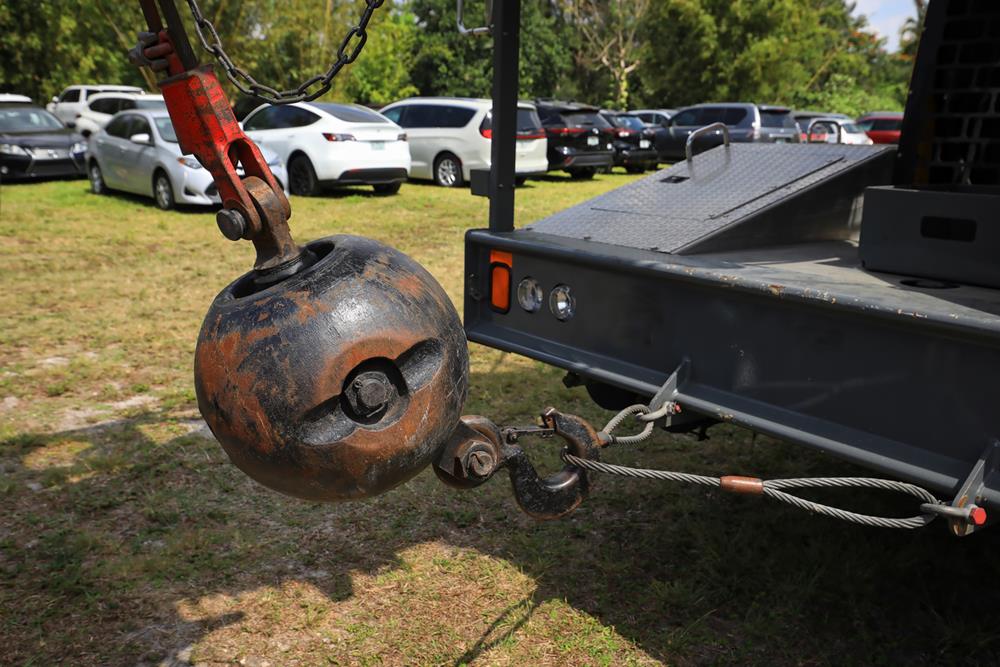
While the wrecking ball was an effective tool for demolition, it had several limitations that eventually led to its decline in use. These limitations made it less suitable for modern demolition projects and paved the way for more precise methods.
- Control: The wrecking ball’s movement was difficult to control, making it challenging to target specific parts of a building. This lack of precision often resulted in unnecessary damage to surrounding structures.
- Safety Risks: The force of the wrecking ball could cause unpredictable collapses. This posed a serious safety risk to workers on the site and required constant vigilance.
- Limited Reach: Wrecking balls were unable to demolish taller buildings or reach high structures with out significant effort. This limitation made them less effective in demolishing skyscrapers or complex buildings.
- Debris Management: The use of a wrecking ball generated large amounts of uncontrolled debris. Cleanup after demolition was often more difficult and time-consuming due to the scattered material.
- Noise and Vibration: The wrecking ball created loud noises and vibrations that could disturb nearby residents or businesses. This made it less practical for use in densely populated urban areas.
The Wrecking Ball’s Decline
The wrecking ball began to lose its prominence in the demolition industry during the 1970s. As cities continued to expand and taller buildings became the norm, the limitations of the wrecking ball became more apparent. Hydraulic excavators and high-reach demolition machines started to take over. These machines provided more control, precision, and safety for demolition crews.
In 1994, one of the last high-profile uses of a wrecking ball was during the demolition of the Detroit Hudson’s Department Store. This iconic building, once the tallest department store in the world, was brought down in a carefully planned demolition.
By the early 2000s, many demolition companies had shifted to using more advanced methods. The use of controlled explosives and hydraulic machinery became the new standard for large-scale demolitions. These methods offered a higher degree of safety and efficiency.
The Modern Era for the Wrecking Ball

In the modern era, the wrecking ball has become more of a symbol than a tool of choice in demolition. By the 1990s, most demolition projects had moved toward using high-reach excavators and controlled explosives, which provided greater precision and safety. However, the wrecking ball still occasionally finds a place in smaller-scale demolitions or as part of a spectacle for larger projects.
In recent years, the wrecking ball has appeared more in media and cultural references than on actual job sites. Miley Cyrus’s 2013 music video “Wrecking Ball” brought renewed attention to the tool. While its role in modern demolition has largely been replaced by more advanced methods, the wrecking ball still holds a place in the history of construction and demolition.
Conclusion
The wrecking ball became an essential tool in the early 20th century and helped to reshape cities and clear old structures for new developments. The ball’s simple design allowed for fast and powerful demolition, which made it a favorite for large-scale projects.
Though newer methods have replaced it, the wrecking ball’s role in construction history remains. It stands as a reminder of a time when heavy steel and swinging force were the go-to tools for bringing down buildings.