

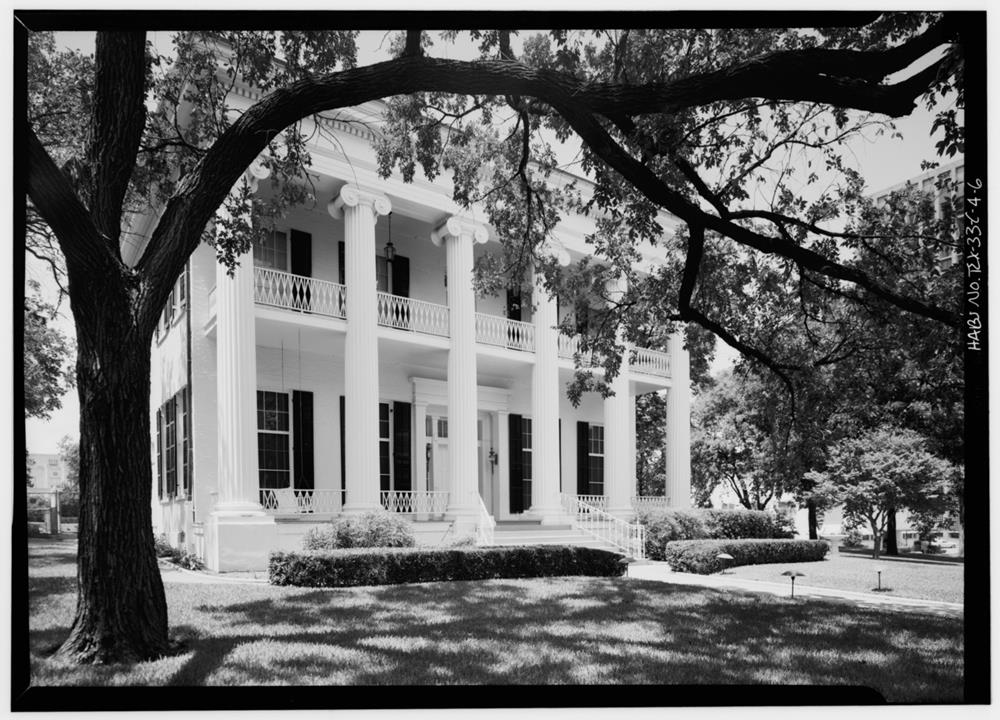
The Texas Governor’s Mansion showcases both artistic grandeur and mysterious legends. You’ll find hallways lined with portraits documenting Texas’s political evolution alongside murals depicting historic battles by renowned artists like Hermann Lungkwitz. While admiring the Greek Revival architecture with its towering Ionic columns, you might encounter whispers of the paranormal—from Sam Houston’s spirit to a weeping maid by the front door. The mansion’s survival after a devastating 2008 fire reveals an even more compelling story.
Key Takeaways
- Built in 1856 by master builder Abner Cook, the Texas Governor’s Mansion is a hallmark of Greek Revival architecture.
- The mansion was severely damaged by arson in 2008 and underwent a $25 million restoration, completed in 2012.
- Original materials like Bastrop pine and Colorado River brick were preserved or sustainably replicated during restoration.
- The home is filled with governors’ portraits and historical artwork, and is steeped in legends of ghostly encounters.
- Today, it remains the oldest continuously used governor’s residence west of the Mississippi River.
The Architectural Legacy of Abner Cook’s Greek Revival Masterpiece
Completed in 1856, the mansion was designed and built by Abner Cook, one of Texas’s earliest and most celebrated builders. His vision fused Greek Revival aesthetics with practical adaptations suited to Austin’s hot climate. Hallmarks of this style—Ionic columns, a symmetrical façade, and wide verandas—were combined with features such as deep hallways and cross ventilation to ease the South Texas heat.
Cook used local materials wherever possible, including brick from his Colorado River clay pit and longleaf pine milled in Bastrop. These resources gave the structure a durability that has allowed it to weather more than 165 years of political and environmental upheaval. Unlike many other executive residences acquired later or retrofitted from older homes, this mansion was built specifically as a governor’s home—an uncommon choice in the 19th century American South.
The Texas Legislature appropriated $14,500 for construction, and the final result was a home of remarkable elegance and functionality. It remains a cornerstone of Austin’s architectural and political identity.
From Limestone to Legacy: Materials That Built a Monument
What made the mansion resilient wasn’t just its design—it was also the quality and sourcing of materials. Cook’s vertical operation ensured that every brick, beam, and board met his exacting standards. Sand-mottled bricks gave the mansion’s exterior its characteristic warmth, while Bastrop pine offered strength and visual harmony to its interiors.
The 2008 arson fire threatened this legacy. However, conservationists rallied, salvaging as many original materials as possible. New materials, where needed, were sourced from within 500 miles, allowing the mansion to meet LEED sustainability guidelines. Restoration specialists carefully matched the historic textures, colors, and construction techniques, preserving both the look and feel of the original.
These efforts didn’t just restore a structure—they honored a philosophy: that history is best preserved by living in it, not just looking at it.
Whispers Through the Halls: Legends & Lore of the Governor’s Residence
Like many historic homes, the Texas Governor’s Mansion is not without its ghost stories and folklore. Perhaps the most well-known tale involves the spirit of Sam Houston, reportedly seen in the bedroom he once occupied. Staff and visitors have recounted eerie incidents—lights flickering, cold drafts, and even the glow of Houston’s portrait in an empty room.
Other stories include a weeping maid near the front door, footsteps echoing in empty halls, and whispered voices in the dead of night. These tales have been handed down through generations, blending folklore with the mansion’s long-standing role in public life.
While there’s no formal documentation of hauntings, these legends underscore the mansion’s place in Texas’s cultural imagination. It is, after all, not just a house—it’s a living, breathing character in the state’s ongoing story.
Portraits of Power: The Art and Murals Adorning Texas’ Executive Home
The mansion serves as a visual archive of Texas leadership, adorned with portraits of every past governor. Painted by renowned artists such as William Henry Huddle, these works help visitors trace Texas’s political history through brushstrokes and canvas. Though specific murals by Hermann Lungkwitz or Julian Onderdonk have not been confirmed inside the mansion, artworks in similar styles appear throughout state buildings.
The Greek Revival architecture provides a clean, dignified setting for this evolving gallery. While the home lacks large-scale murals of the Alamo or San Jacinto battles, its curated collection reflects themes of public service, frontier resilience, and civic pride.
Occasional contemporary installations offer contrast to the historical collection, ensuring that the mansion reflects not just the past but also the ongoing story of leadership and identity in Texas.
Rising From the Ashes: Survival and Restoration After the 2008 Fire
On June 8, 2008, the mansion suffered a devastating fire caused by an arsonist who threw a Molotov cocktail onto the front porch. Though the interior was mostly empty due to ongoing renovations, the blaze collapsed the roof and destroyed the attic and upper floors, sparking a crisis that would test the state’s commitment to its heritage.
Initially budgeted as a $10 million maintenance project, restoration ballooned to over $25 million. Key funding came from both state appropriations and $3.5 million in private donations. Restoration teams preserved everything they could—from bricks to hinges—and introduced geothermal heating, solar water heating, and modern fire suppression systems.
The mansion reopened in 2012, more structurally secure and environmentally sustainable than ever. The arsonist was never caught, but the building’s resurrection stands as a powerful symbol of Texas’s determination to protect its past.
First Families: Life and Leadership Within Historic Walls
While the mansion is a symbol of political power, it’s also been a home to generations of First Families. Governors have raised children here, celebrated holidays, and endured personal trials—all within the building’s historic framework.
Historical records document the presence of up to 38 enslaved individuals who lived and worked at the mansion prior to emancipation. Their lives—often recorded as “servants” in archival material—formed the backbone of daily operations during the early years, and their history is now acknowledged as an essential chapter in the mansion’s story.
The mansion has also witnessed poignant family moments. One tale recalls Governor Hogg ordering his children to stop sliding down the banister after a fall. And in 1856, the state provided just $2,500 for furnishings, forcing early governors to use personal items—highlighting the resourcefulness needed to make this house a home.
The Mansion’s Evolution: 160+ Years of Preservation and Change
For over 165 years, the Texas Governor’s Mansion has stood as a symbol of leadership, legacy, and resilience. From its classical Ionic columns to its haunted legends and community-supported restoration, the mansion continues to embody the complexities of Texas identity—grandeur blended with grit, tradition softened by evolution.
In its walls are not only the stories of governors and policies, but of families, workers, and citizens who’ve made this place a vital part of the state’s cultural fabric. More than just a residence, it remains a touchstone for the past and a beacon for Texas’s future.